Bridal boxes across most households hold at least one piece that has been worn exactly once only. A kundan jewelry set usually sits at the top of that pile, bought for a wedding and quietly retired after it. The problem is rarely the jewelry. It is the assumption that the whole set must go on together at a special occasion.
Split apart, the same pieces behave differently. A kundan jewelry set gives you three or four separate statement options rather than one fixed look, which is what makes it useful with a contemporary saree, a slip dress, or a tailored fusion outfit. The craftsmanship stays traditional. Only the pairing changes, and pairing is the part you control.
Why a Full Kundan Set Often Overwhelms an Outfit
Wearing Every Component at Once Flattens the Detail: Kundan work relies on contrast between polished gold foil and colored stones, and that contrast needs space to register. Necklace, earrings, tikka, and matching bangles worn together fill every visual gap, so the eye reads one continuous mass of gold instead of individual settings. The craftsmanship gets lost inside its own repetition.
The Slow Cost of Saving It for a Perfect Occasion: Jewelry specialists who handle repairs see the same story often, where a set stays boxed for years and comes back with dulled plating, a loose stone, or a clasp that no longer holds. Kundan settings use foil behind the stones, and trapped humidity works on that foil quietly. Waiting narrows what remains wearable.
See also: Inside Romania’s Manpower Boom: Why Global Employers Are Turning to Staffing Agencies
Kundan Paired with Contemporary Sarees, Dresses and Fusion Outfits
Splitting the Set Is What Makes It Modern: Modern styling starts by treating the set as separate pieces rather than a uniform. Wear the necklace alone with a plain georgette saree. Save the tikka for a mehndi and skip it everywhere else. Bought this way, a kundan jewelry set covers a full season of events instead of one afternoon, because each component leads to a different look.
Sarees, Dresses and Fusion Outfits Each Take a Different Component: Contemporary sarees in solid crepe or organza take the full necklace, since the drape leaves the collarbone open. A structured dress or a fusion cape set suits the earrings alone, where ornate work against sharp tailoring creates the kind of contrast haute couture houses have used for decades. Palazzo and shirt combinations carry bangles best.
Letting One Traditional Piece Lead the Whole Look
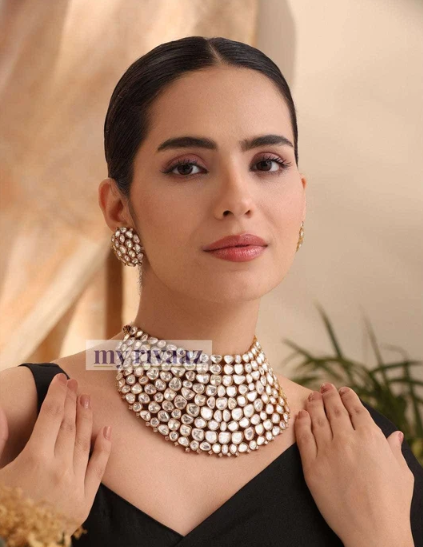
The Largest Piece Sets the Ceiling for Everything Else: The heaviest piece decides how much room the rest of the look has. A wide kundan choker means small studs, a bare wrist, and no Maang tikka. Chandelier kundan earrings mean an empty neckline. This is not restraint for its own sake, since two ornate pieces at different heights split attention and neither one reads properly.
Full Sets Compared with a Single Kundan Piece: Complete sets remain the right call for a bridal function, where scale is expected and photographs are formal. They lose flexibility elsewhere, since matched pieces rarely suit anything but ethnic wear. A single component carries less ceremonial weight, and it earns that back through frequency, moving from a dinner to a festival to an office celebration without looking staged.
Simple Clothing and the Events Where Kundan Lands Best
Quiet Clothing Keeps Fine Setting Work Visible: Plain fabric is what allows detailed stone setting to be seen at all. Sequins, zari borders, and busy prints compete for the same light, and kundan loses because its shine is soft rather than sharp. The clean lines of modern minimalism work as a backdrop here, along with restrained accessories, since a loud handbag pulls focus straight off the neckline.
Parties, Dinners and Cultural Events Each Take a Different Scale: Occasion decides size more than outfit does. A seated dinner suits small kundan studs and one bangle, where a heavy choker becomes uncomfortable within an hour. Evening parties carry the full necklace comfortably. For a cultural event or festival lunch, a kundan jewelry set worn in parts keeps the traditional reference without turning the look into wedding wear.
Practical Checks before a Kundan Set Goes On
What to Confirm before Leaving the House: Most styling errors with ornate jewelry happen at the last minute, when one extra piece goes on without thought. Running through the points below protects both the look and the pieces themselves, and it keeps a kundan jewelry set in regular rotation rather than sealed in tissue until the next wedding invitation arrives.
- Kundan goes on last, after perfume, hairspray, and moisturizer have fully dried.
- Foil-backed stones dislike moisture, so a set should never be worn swimming or stored in a humid bathroom cupboard.
- One ornate piece plus one small piece is the usual limit for a modern outfit.
- Soft cotton pouches protect plating better than sharing a box with other metal pieces.
- A quick check of every stone before wearing catches a loose setting before it becomes a lost stone.
Old Craft in a Modern Wardrobe
Kundan retains its appeal because the craft has not changed in centuries, and the wardrobes around it have. Every year a set stays boxed is a year of value sitting still while the plating ages. Choose one piece, pair it with something modern this month, and get in touch for help building the rest of the look.