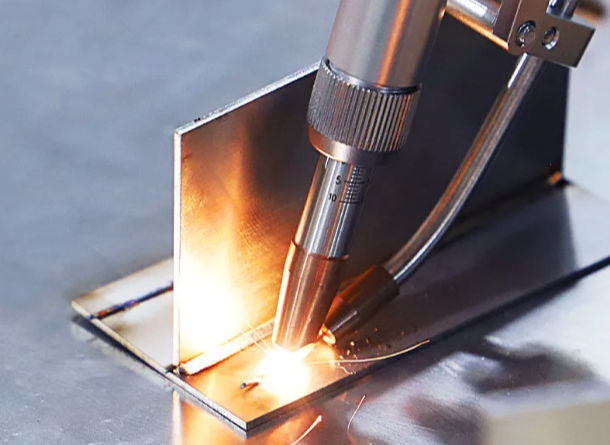
Investing in industrial welding equipment is a major decision. A machine must fit the production process, material requirements, available space, operator capabilities, and long-term business objectives.
Laser welding technology can offer significant advantages, but selecting the right system requires careful evaluation. Working with an experienced automatic laser welding machine manufacturer can help businesses understand which configuration is appropriate for their application.
Define the Production Objective
Before comparing machines, manufacturers should clearly define what they want to improve.
The objective might be higher production speed, more consistent weld quality, reduced manual work, better precision, or integration with an automated production line.
Without a clear objective, it is easy to purchase equipment that offers impressive specifications but does not solve the company’s actual production problem.
Analyze Current Welding Processes
Manufacturers should evaluate their existing welding workflow.
Questions may include:
How much time is spent positioning components?
How much variation exists between operators?
How frequently are defective welds produced?
How much rework is required?
How many operators are needed for each production stage?
The answers can help determine whether automation is likely to provide meaningful benefits.
Understand Material Requirements
Material selection strongly influences laser welding performance.
Different metals absorb laser energy differently, and material thickness can affect the required power and process parameters.
Manufacturers should identify the exact materials they intend to weld before selecting a machine.
If several materials are involved, the equipment should be evaluated for the full range of applications.
Consider Component Geometry
The shape and size of the components are equally important.
A machine designed for small precision components may not be appropriate for large assemblies.
Manufacturers should consider the dimensions, weight, access points, and joint locations of typical workpieces.
This ensures that the selected equipment can physically accommodate the production process.
Determine Required Automation
Automation exists at different levels.
Some systems automate welding movement while requiring manual loading and unloading. More advanced production cells can incorporate automated material handling, robotics, sensors, and inspection systems.
Manufacturers should choose an automation level based on production volume and available resources.
More automation is not automatically better if the application does not require it.
Production Volume
Production volume should influence equipment selection.
A factory producing a small number of custom components may not need the same automation level as a high-volume manufacturer producing thousands of identical parts.
Businesses should estimate current and future production requirements.
A machine should ideally support growth without creating unnecessary capacity costs today.
Evaluate Cycle Time
Cycle time is more useful than headline laser power when evaluating production efficiency.
Manufacturers should calculate the complete time required to load, position, weld, inspect, and unload a component.
Automation can only improve production if the entire workflow becomes more efficient.
Quality Requirements
Different industries have different welding standards.
Manufacturers should define acceptable weld appearance, penetration, strength, dimensional accuracy, and defect rates.
Testing should be conducted using actual production materials and joint configurations.
This provides a more realistic understanding of machine performance.
Machine Footprint
Factory space can be expensive.
The machine itself is only part of the required footprint. Manufacturers may also need space for safety equipment, material handling, operator access, ventilation, and maintenance.
A complete layout should be considered before purchasing.
Software and Controls
Modern automated systems rely heavily on control software.
Operators should be able to set and monitor relevant parameters efficiently.
The interface should be practical for the production team and support repeatable process settings.
If the machine will integrate with other factory equipment, software compatibility should also be evaluated.
Maintenance Requirements
Every industrial machine requires maintenance.
Businesses should ask about consumable components, service intervals, replacement parts, and technical support.
Unexpected downtime can quickly become expensive.
When selecting an automatic laser welding machine manufacturer, manufacturers should therefore evaluate after-sales support as carefully as the equipment itself.
Operator Training
Employees need appropriate training before operating automated welding equipment.
Training should cover machine operation, setup, safety procedures, quality inspection, and basic troubleshooting.
A machine with advanced features provides limited value if operators cannot use those features effectively.
Safety Systems
Laser systems require appropriate safety measures.
The equipment should be designed and installed according to applicable safety requirements.
Businesses should also consider protective enclosures, access controls, interlocks, ventilation, and operator procedures.
A complete safety assessment should be performed before production begins.
Return on Investment
The financial analysis should include more than purchase price.
Potential factors include:
- Labor savings
- Production capacity
- Reduced rework
- Improved consistency
- Maintenance
- Energy consumption
- Training
- Integration costs
- Expected equipment life
This provides a more realistic estimate of return on investment.
Supplier Support
The supplier relationship can continue for years after installation.
Manufacturers should evaluate whether the supplier offers installation support, training, troubleshooting, spare parts, and technical assistance.
Good communication can be especially valuable when the production process changes.
Test Before Committing
Whenever possible, manufacturers should conduct application testing.
Samples can reveal whether the proposed equipment meets required welding standards.
Testing also allows operators and engineers to become familiar with the system before making a major investment.
Plan for Future Expansion
Manufacturing requirements can change.
A company may add new products, increase production volume, or introduce additional materials.
Equipment with suitable flexibility can make future expansion easier.
The goal is to select a system that solves today’s problem without unnecessarily limiting tomorrow’s opportunities.
Conclusion
Choosing automated laser welding equipment requires a detailed evaluation of production objectives, materials, component geometry, automation level, cycle time, quality requirements, factory space, maintenance, safety, and supplier support.
An experienced automatic laser welding machine manufacturer can help businesses evaluate these factors and identify an appropriate system.
The most successful investment is one that fits the complete production workflow rather than focusing on a single machine specification. Careful testing and planning can help manufacturers improve efficiency while maintaining the quality and consistency required in modern industrial production.