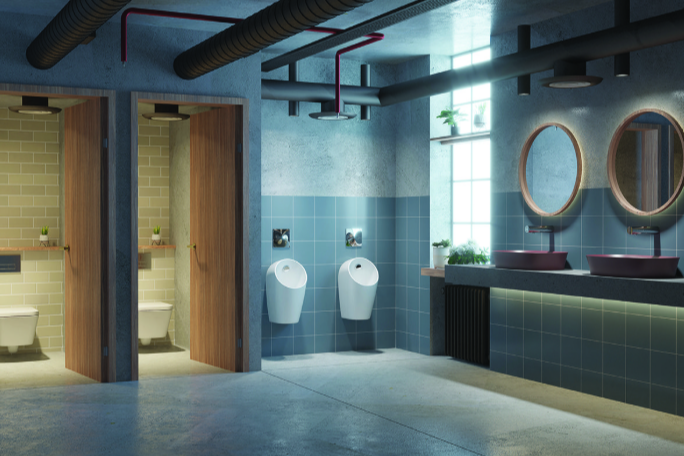
Commercial washrooms are used constantly in many business environments, yet they are sometimes treated as an afterthought during facility planning. In reality, the quality and design of a washroom can affect hygiene, maintenance costs, water consumption, user satisfaction, and the overall appearance of a building.
Whether the facility is an office, hotel, restaurant, school, healthcare property, retail store, or public building, the right equipment can make everyday operations easier. For businesses purchasing equipment in volume, working with a dependable supplier of commercial bathroom supplies wholesale can also simplify procurement and standardization.
Think About Traffic First
The number of daily users should influence every bathroom-equipment decision.
A small office with several dozen employees has very different requirements from a shopping center or transport facility receiving thousands of visitors. High-traffic locations need equipment designed for frequent operation and rapid servicing.
Before choosing products, facility managers should estimate daily usage and identify peak periods. This information can help determine how many dispensers, sinks, dryers, and other fixtures are required.
Overcrowding can create hygiene and maintenance problems, while excessive equipment can unnecessarily increase installation and maintenance costs.
Select Equipment for Heavy Use
Commercial bathrooms should generally use products designed specifically for demanding environments.
Dispensers, faucets, hand dryers, toilet accessories, and other fixtures may be operated hundreds of times each day. Their construction should therefore be able to tolerate repeated use.
Durability also affects maintenance schedules. If equipment frequently breaks or develops operational problems, cleaning teams may spend more time dealing with repairs instead of maintaining the facility.
When comparing products, buyers should look beyond appearance and consider construction materials, mechanism quality, replacement components, and supplier support.
Touchless Technology
Touchless bathroom technology has become increasingly common.
Sensor-operated faucets, soap dispensers, and paper towel dispensers can reduce direct contact with shared surfaces. This can make the user experience more convenient and may support hygiene goals.
However, touchless technology should be selected carefully. Sensors need to respond consistently without excessive false activations. Battery-powered units should also provide reasonable operating life.
A touchless product that is difficult to maintain can create more problems than it solves. Ease of servicing should therefore be considered alongside the technology itself.
Managing Soap and Paper Consumption
Consumables represent an ongoing expense in commercial bathrooms.
If a dispenser releases too much soap or paper with each activation, consumption can increase substantially over thousands of daily uses. Controlled dispensing can help facilities reduce unnecessary waste.
At the same time, dispensers should provide enough material for users to complete the task comfortably. Excessive restrictions can lead to poor user satisfaction.
The ideal system balances hygiene, convenience, and controlled consumption.
Water Management
Water efficiency is another important consideration.
Bathrooms can consume substantial quantities of water through faucets and toilets. Efficient fixtures can reduce waste while maintaining acceptable performance.
Sensor faucets may help prevent water from running unnecessarily. Flow-control technology can also reduce consumption without requiring users to change their behavior.
For large facilities, small savings per use can become significant over an entire year.
Make Cleaning Easier
Commercial bathrooms require frequent cleaning, particularly in high-traffic environments.
Products should ideally have surfaces and designs that allow cleaning staff to work efficiently. Difficult corners, exposed mechanisms, and complicated structures can increase cleaning time.
The placement of fixtures also matters. Dispensers should be accessible for both users and maintenance staff without creating unnecessary obstacles.
A well-planned bathroom allows cleaning teams to move through their routine quickly and consistently.
Accessibility Should Be Integrated
Accessibility should be considered from the beginning of bathroom planning.
Users may have different mobility, reach, and physical requirements. Fixtures should therefore be installed at suitable positions, while sufficient space should be provided for movement.
Grab bars, accessible sinks, mirrors, faucets, and dispensers may all be part of an inclusive bathroom design.
Local building regulations and accessibility standards should always be consulted during the planning and installation process.
Appearance Still Matters
Function is essential, but appearance should not be ignored.
In hotels, restaurants, offices, and retail properties, customers may associate the condition of the bathroom with the quality of the business itself.
A consistent design can create a cleaner and more professional appearance. Matching finishes and coordinated accessories can make even a practical commercial washroom feel more carefully designed.
This is particularly valuable in hospitality environments where guest experience is a major priority.
Standardization Can Reduce Complexity
Businesses operating several buildings can benefit from standardizing their bathroom products.
Using the same dispenser models, accessories, and fixtures across different locations can make procurement and maintenance easier. Staff can become familiar with the equipment, and replacement parts can be kept more efficiently.
Standardization can also create a consistent brand experience.
For companies purchasing equipment for multiple sites, wholesale procurement may provide a practical way to maintain this consistency.
Evaluate the Supplier Carefully
A supplier should provide more than a product catalog.
Before placing a large order, businesses should consider product quality, technical specifications, availability, lead times, replacement parts, warranty policies, and customer support.
A reliable supplier should be able to explain the differences between products and help buyers select equipment according to the actual requirements of the facility.
This is particularly important when purchasing commercial bathroom supplies wholesale, because a poor product choice can affect multiple locations at once.
Calculate Total Cost of Ownership
The cheapest product is not always the most economical.
A proper comparison should include purchase price, installation, maintenance, consumables, energy use, water use, replacement frequency, and expected lifespan.
A durable dispenser that costs slightly more but operates reliably for years may be a better investment than a low-cost alternative that needs frequent replacement.
Facility managers should therefore evaluate long-term value rather than focusing exclusively on the initial quotation.
Conclusion
An efficient commercial bathroom combines appropriate equipment, good layout, reliable maintenance, and thoughtful user-focused design.
Businesses should begin by understanding traffic levels and operational requirements. They can then select durable fixtures, efficient dispensers, touchless technology, water-saving products, and accessible equipment where appropriate.
For organizations managing multiple facilities, a dependable source of commercial bathroom supplies wholesale can help simplify procurement while maintaining consistent quality across different locations.
With careful planning and supplier selection, commercial bathrooms can become easier to maintain, more hygienic, more efficient, and more comfortable for everyone who uses them.