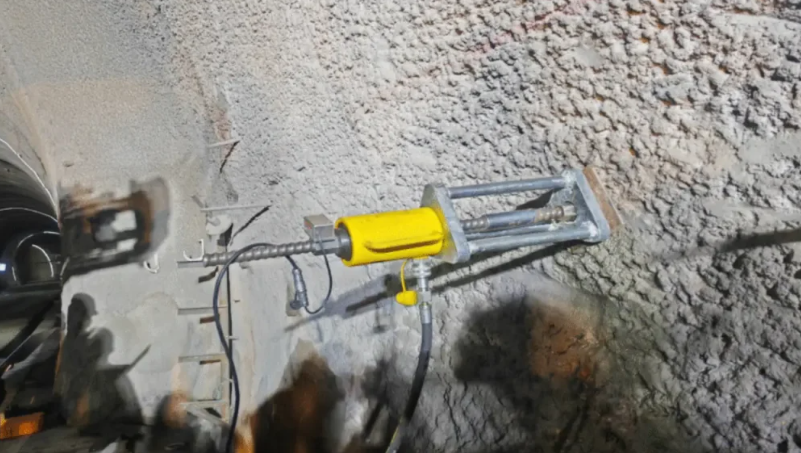
Ground stabilization is an essential part of many construction and civil engineering projects. When engineers work with unstable slopes, fractured rock, loose soil, tunnels, excavation walls, or challenging foundation conditions, they need reinforcement systems that can be installed efficiently while providing dependable structural support.
Traditional anchoring methods can require multiple installation stages and specialized equipment. Self-drilling anchor systems offer an alternative approach by combining drilling and grouting through a hollow anchor bar. This design can make installation more practical in ground where conventional drilling holes may be difficult to maintain.
Understanding how these systems work can help contractors and project managers make better decisions when selecting products from an anchor bolt manufacturer.
What Is a Self-Drilling Anchor System?
A self-drilling anchor system generally consists of a hollow threaded anchor bar, drill bit, couplers, nuts, plates, and grout. During installation, the anchor bar acts as both the drilling rod and the permanent reinforcement element.
The hollow center of the bar provides a channel through which grout can be injected. As drilling progresses, grout can be introduced into the surrounding ground, helping create a bonded anchoring system.
This approach is particularly useful in formations where the drilled hole may collapse before a conventional solid anchor can be installed.
Why Installation Conditions Matter
Ground conditions can vary significantly from one project to another. A drilling method that works efficiently in competent rock may become problematic in loose soil or fractured formations.
Self-drilling technology can be advantageous in these situations because the hollow anchor remains in place after drilling rather than needing to be removed. Grouting through the bar can help stabilize the surrounding ground and develop the required bond.
ONTON describes its self-drilling anchor bars as solutions for applications including rock bolting, soil nailing, and micropiling.
Combining Drilling and Grouting
One of the main benefits of self-drilling technology is the ability to integrate drilling and grouting into a streamlined installation process.
A drill bit is connected to the end of the hollow bar. The bar rotates while advancing into the ground, and grout can be pumped through the internal channel. Once the desired depth is reached, the installed bar becomes part of the reinforcement system.
This approach can reduce the number of separate operations required on site. It can also be useful where access is limited or where maintaining an open borehole would be difficult.
Applications in Construction
Self-drilling anchor systems are used across several areas of civil and geotechnical engineering.
Slope Stabilization
Unstable slopes can present significant risks to roads, buildings, railways, and other infrastructure. Anchoring can help reinforce the soil or rock mass and improve overall slope stability.
Tunnel Construction
Tunneling projects often encounter fractured or weak ground. Self-drilling hollow bars can be used for ground reinforcement and tunnel stabilization, particularly where rapid installation is important.
Soil Nailing
Soil nailing is commonly used to stabilize excavation faces and slopes. The anchor bar can function as reinforcement while grout provides bonding between the bar and surrounding ground.
Micropiles
Micropiles are used where conventional foundations may not be practical. Hollow bar systems can support drilling and grouting operations in restricted-access areas and challenging ground conditions.
Choosing the Correct Thread System
Not every self-drilling anchor bar is identical. Thread configuration can affect installation, connection with accessories, drilling equipment compatibility, and overall system performance.
R-thread systems are manufactured according to standards such as ISO 10208 and ISO 1720, while T-thread systems follow international T-thread specifications. ONTON offers both types for different applications.
The correct selection should be based on project requirements and equipment compatibility rather than simply choosing the most commonly used option.
Strength Is Only One Part of Performance
When selecting an anchor bar, tensile strength is important, but it should not be the only consideration.
Ductility is also critical because an anchoring component may need to deform under load before failure. Material selection, manufacturing technique, heat treatment, thread geometry, and dimensional consistency can all influence performance.
ONTON’s technical information emphasizes that steel grade alone does not determine the final quality of a self-drilling anchor bar. Manufacturing and processing methods can significantly affect the resulting properties.
This highlights why the manufacturing process should be evaluated alongside the raw material specification.
Corrosion Protection
Long-term projects may require additional protection against corrosion. Moisture, groundwater, salt, chemicals, and other environmental factors can gradually affect exposed steel.
Galvanized self-drilling hollow bars are designed to provide additional corrosion resistance through a zinc coating. Depending on the application, epoxy coatings or stainless-steel options may also be considered.
For example, ONTON provides stainless-steel self-drilling anchor bars using AISI 316 stainless steel for applications where corrosion resistance is particularly important.
The right solution depends on the environmental conditions and expected service life of the project.
Quality Assurance and Standards
Construction companies should work with manufacturers that maintain documented quality-control systems.
International standards can help define expectations for materials, dimensions, mechanical performance, and installation. A manufacturer familiar with these standards is better positioned to supply products appropriate for professional engineering projects.
ONTON reports ISO 9001:2015 certification and references several standards relevant to its anchor systems.
Buyers should request technical specifications and test information when evaluating products for major projects.
Custom Manufacturing Can Improve Project Compatibility
Large construction projects may require non-standard dimensions, lengths, thread configurations, coatings, or accessories.
A manufacturer with customization capabilities can adapt products to specific project requirements instead of forcing contractors to redesign their installation approach around an off-the-shelf product.
This can be particularly valuable for specialized infrastructure projects where engineering specifications are more demanding.
What to Look for in an Anchor Supplier
When comparing an anchor bolt manufacturer, contractors should consider several questions:
- Does the manufacturer have extensive production experience?
- Are suitable thread and diameter options available?
- Can the manufacturer provide technical documentation?
- Are corrosion-resistant options available?
- Can products be customized?
- Does the supplier maintain quality-control procedures?
- Are accessories available as part of a complete system?
- Can the supplier meet the project’s delivery schedule?
Looking at these factors can provide a much clearer picture than comparing product prices alone.
The Future of Ground Reinforcement
Modern construction increasingly demands solutions that are efficient, reliable, adaptable, and suitable for difficult working environments. Self-drilling hollow anchor technology addresses several of these requirements by combining drilling, reinforcement, and grouting into an integrated system.
As infrastructure projects become more complex, manufacturers will continue to improve materials, thread designs, coatings, production techniques, and installation technology.
For contractors, the key is to select systems based on engineering requirements rather than treating anchor bars as generic construction materials.
Conclusion
Self-drilling anchor systems have become an important option for ground stabilization because they can simplify installation while providing reinforcement in challenging ground conditions. Their applications extend across slope stabilization, tunneling, soil nailing, micropiling, and other geotechnical projects.
However, the performance of the system depends heavily on product selection and manufacturing quality. Working with an experienced anchor bolt manufacturer can help contractors obtain the appropriate combination of steel grade, thread configuration, corrosion protection, accessories, and technical support.
A careful supplier evaluation at the beginning of a project can ultimately contribute to safer installation, improved efficiency, and more reliable long-term ground support.